About Me

My photo
Solomon Adewunmi is the Editor-in-Chief , The New Federation(news2day.emyspot.com)/Liberty Port(2day.emyspot.com)/Federationews2day(one.emyspot.com). He attended Ajeromi Ifelodun High School, Olodi-Apapa, Lagos/Ibadan Grammar School, Ibadan and the University of Lagos. Solomon possesses a Bachelor of Science degree in Sociology, BBC/EC CERTIFICATE IN NEWS JOURNALISM (FEB. 2001), CERTIFICATE IN ARTS AND CULTURE CRITICISM (NANTAP MAY 2001) ,CERTIFICATE IN PEACE JOURNALISM (JUSTICE,DEVELOPMENT AND PEACE COMMISSION), CERTIFICATE IN CONFLICT ANALYSIS[UNITED STATES INSTITUTE OF PEACE ONLINE TRAINING PROGRAM, OCT.2004] ,CERTIFICATE IN INTERFAITH CONFLICT RESOLUTION( UNITED STATES INSTITUTE OF PEACE, JAN. 2009).
Showing posts with label Michael Imoudu. Show all posts

Workers Welfare : Michael Imoudu as a Role Model 3


Ikenga-Ndi Igbo-TV - LABOUR ICON Michael Imoudu is not a ...

 Discrimination was the order of the day during the colonial era. In November 1947, Imoudu led others to demonstrate against racial discrimination at the Bristol Hotel, Lagos. 

In the cause of the demonstration, he was physically assaulted and arrested by the Police. However, of worry, is the self-preservation approach of present day labor leaders. 

At different times, he mobilized the conference of the Nigeria Bar Association (NBA) to protest against colonial rule and also workers and peasants for the independence movement led by Dr. Nnamdi Azikwe, during the nationwide tour of the National Council of Nigeria Citizens (NCNC), to raise funds and support for the Nigerian delegation to the constitutional conference in London. 

The Labor wing of the NC-Democratic Grand Alliance, of which Imoudu was a member, won four seats in the Lagos Town Council elections in 1950.

 In 1964, Imoudu led a general strike against the restriction of democracy, which was targeted at compelling the government to implement the report of the Morgan commission. 

In addition, he was a member of the Marxist Socialist Workers and Farmers Party.

 In the Second Republic, he was Vice President of the Peoples Redemption Party(PRP) led by Mallam Aminu Kano. 

His track record formed the basis for his becoming the founding President of the Nigeria Labor Congress(NLC) in 1964.

 The NLC of today possess a different design and ideology. 

Sadly, pragmatic approaches to labor issues and concepts remain lacking, even as Labour leaders' sacrifices and tribulations for Nigerian workers are cosmetic, debatable and trailed by controversy. Those in the labor struggle with Imoudu's frame of mind and character are relatively few and extremely difficult to identify, in these days of ''he who pays the piper, dictates the tune''. 


Workers Welfare : Michael Imoudu as a Role Model 2


The need for an increase in wages and better working conditions prompted Michael Imoudu to lead a demonstration from the locomotive yard in Ebute metta, Lagos to the Government House situated at Marina, Lagos Island, Lagos.

The Governor General of the Colony of Lagos, Bernard Bourdillon, noticed that any form of industrial action at that period, could disrupt railway supplies to the coalition, during the Second World War in 1941. It was on this premise he acceded to a 50 percent pay rise for the workers.

This success, further inspired Imoudu to put forward more demands, among which were conversion of daily casual labor to salaried employment, Saturday work with pay, permanence of daily labor, holiday travel grant and payment of arrears to cover from 1932 to 1942 unpaid entitlements.

This did not go down well with Bourdillon, who facilitated the termination of Imoudu’s appointment on 23 January 1943 and also ordered his arrest under the Nigeria General Defense Regulations, 1941.

In quick succession, he was relocated and remanded at the Benin prison. While in prison, he influenced inmates to demonstrate against poor feeding and other deplorable prison conditions.

In response, the British Colonial Government in 1943, restricted Imoudu’s movement to the palace of the paramount Chief of Auchi and made an order for him to report twice a week to the Auchi Police station.

As a result of a face off with the District Officer of Auchi and his moves to facilitate the establishment of peasants’ cooperatives for the benefit of peasants in Etsako and Ora, he was again remanded in the Auchi prison.

Some of his comrades, including T. A Bankole, openly spoke against Imoudu’s action, to the hearing of the Chief Secretary of Government.

After spending two and a half years in prison, the labor activist was set free.

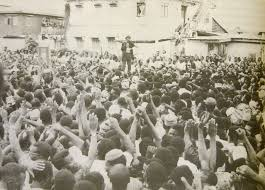
A mass rally was held at Oko-Awo, Lagos to celebrate his release from prison, while nationalists such as Herbert Macaulay were on the ground to grace the occasion.

In June 1945, he successfully led over 30,000 workers to down tools for 44 days.

The industrial action hinged on the inability of the colonial government to actualize the promise of Bourdillon in 1942, to review allowances according to an index.

Bourdillon's successor, Arthur Frederick Richards, vigorously refused to pay the allowance.

This resulted in the abrupt end of the unpopular Richards constitution, and set the stage for self government.

Workers Welfare : Michael Imoudu As A Role Model 1


The activities of Labour leaders today are the raging debate among workers in Nigeria. Workers express sadness and worry over the way their leaders handle issues concerning them. 

While the workers continue to wallow in the vicious cycle of poverty, hunger and worry, their leaders insist that they should be patient and show understanding with the government. 

The agility and activeness of labor leaders of the present time is determined by the political class and not by the deteriorating condition of workers in the country. 

Up till this moment, the name Michael Athokhamien Imoudu, represents a good example of a labor leader with a difference within the Nigerian territory and has continued to serve as a source of inspiration for the present set of labor leaders. 

Perhaps, Imoudu was born on 7 September 1902, to a soldier who had fought in East Africa. His upbringing resulted into his fearless personality. 

He did not have a fear of witches or wizards, master or servant, black or white. At the age of 14, he began his education at a government school, Ora.

 In the course of his education, he received a double promotion to standard one. After the death of his father, the forward-looking young Imoudu moved on in his quest for education, at various times in Ontisha, Benin, Sapele, Warri and Agbor. 

His adult life revolved on protests against wrong doing by constituted authority. As a student of the government school, Agbor he staged his first protest. 

He led students of the school to protest against the alleged embezzlement of Empire funds by the school’s teachers. This resulted in the manhandling of the Headmaster. 

At various times, he worked as a linesman in the Department of Post and Telegraph (P and T) in 1928 and an apprentice machinist at the Railway Corporation. 

He worked tirelessly on three shillings and four pence per day. 

The work conditions depressed those on the railway, and it was noticeable, but the grievances of the railway men were uncoordinated. 

During the industrial action of the sectional foundery men in 1931, Imoudu spearheaded a platform to fight for the rights of workers. 

This he made possible by opting to work as a journeyman at a reduced wage of three shillings per day. 

On 20, January 1940, Imoudu was the only one among his colleagues who signed the registration document of the Railway workers union and on 7, October 1940, Imoudu was elected President of Railway men. 


Workers Welfare: Michael Imoudu as a Role Model 3


Discrimination was the order of the day during the colonial era. In November, 1947, Imoudu led others to demonstrate against racial discrimination at the Bristol Hotel, Lagos. 
In the cause of the demonstration, he was physically assaulted and arrested by the Police.
However, of worry, is the self-preservation approach of present day labour leaders.
At different times, he mobilized the conference of the Nigeria Bar Association (NBA) to protest against colonial rule and also workers and peasants for the independence movement led by Dr. Nnamdi Azikwe, during the nationwide tour of the National Council of Nigeria Citizens (NCNC), to raise funds and support for the Nigerian delegation to the constitutional conference in London.
The Labour wing of the NC-Democratic Grand  Alliance, of which Imoudu was a member, won four seats in the Lagos Town Council elections in 1950.
In 1964, Imoudu  led the general strike  against the restriction of Democracy, which was  targeted at compelling the Government to implement the report of the Morgan commission. In addition, he was a member of the Marxist Socialist Workers and Farmers Party.
In the Second Republic, he was Vice President of the Peoples Redemption Party(PRP) led by Mallam Aminu Kano.
His track record formed the basis for his becoming the founding President of the Nigeria Labour Congress(NLC) in 1964. The NLC of today possess a different design and ideology.
Sadly, pragmatic approach to labour issues and concepts remain lacking, even as Labour leaders' sacrifices and tribulations for Nigerian workers are cosmetic, debatable and trailed by controversy.
Those in the labour struggle, with Imoudu's frame of mind and character are relatively few and extremely difficult to identify, in these days of ''he who pays the piper, dictates the tune''.

Workers Welfare : Michael Imoudu as a Role Model 2


The need for an increase in wages and better working conditions prompted Imoudu to lead a demonstration from the locomotive yard in Ebute metta, Lagos to the Government House situated at Marina, Lagos Island, Lagos.
The Governor General of the Colony of Lagos, Bernard Bourdillon noticed that any form of industrial action at that period, could disrupt railway supplies to the coalition, during the Second World War in 1941. It was on this premise he acceded to a 50 per cent pay rise for the workers.

This success, further inspired Imoudu to put forward more demands, among which were conversion of daily casual labour to salaried employment, Saturday work with pay, permanence of daily labour, holiday travel grant and payment of arrears to cover 1932 to 1942 of unpaid entitlements.
This did not go down well with Bourdillon, who facilitated the termination of Imoudu’s appointment on 23 January, 1943 and also ordered his arrest under the Nigeria General Defense Regulations, 1941.
In quick succession he was relocated and remanded at the Benin prison, while in prison, he influenced inmates to demonstrate against poor feeding and other deplorable prison conditions.
In response, the British Colonial Government in 1943, restricted Imoudu’s movement to the palace of the paramount Chief of Auchi and made an order for him to report twice a week to the Auchi Police station.
As a result of a face off with the District Officer of Auchi and his moves to facilitate the establishment of peasants’ cooperatives for the benefit of peasants in Etsako and Ora, he was again remanded in the Auchi prison.
Some of his comrades, including T.A Bankole openly spoke against Imoudu’s action, to the hearing of the Chief Secretary of Government.
After spending two and a half years in prison, the labour activist was set free.
A mass rally was held at Oko-Awo, Lagos to celebrate his release from prison, while nationalists such as Herbert Macaulay were on ground to grace the occasion.
In June 1945, he successfully led over 30,000 workers to down tools for 44 days.
The industrial action was hinged on the inability of the colonial Government to actualize the promise of Bourdillon in 1942, to review allowances according to living index.
Bourdillon’ successor, Arthur Frederick Richards vigorously refused to pay the allowance.
This resulted in the abrupt end of the unpopular Richards constitution, and set the stage for self government. To be continued.

Workers Welfare : Michael Imoudu As A Role Model 1


The activities of Labour leaders today is the raging  debate among workers in Nigeria. Workers express sadness and worry over the way their leaders handle issues concerning them.
While the workers continue to wallow in the vicious cycle of poverty, hunger and worry, their leaders insist that they should be patient and show understanding with the Government.
The agility and activeness of labour leaders of the present time, is determined by the political class and not by the deteriorating condition of workers in the country.
Up till this moment, the name Michael  A thokhamien  Imoudu, represents a good example of a labour leader with a difference within the Nigerian territory and has continued to serve a s a source of inspiration  for the present set of labour leaders. Perhaps.
Imoudu was born on 7, September, 1902, to a Soldier, who had fought in East Africa. His upbringing resulted into his fearless personality. He did not have fear for witches or wizards, master or servant, black or white.
At the age of 14, he began his education at the Government school, Ora. In the course of his education, he received double promotion to standard one. After the death of his Father, the forward looking young Imoudu moved on in his quest for education, at various times at Ontisha, Benin, Sapele, Warri and Agbor.
His adult life revolved on protests against wrong doing by constituted authority. As a student of the Government school, Agbor he staged his first protest.
He led students of the school to protest against the alleged embezzlement of Empire funds by the school’s teachers. This resulted in the manhandling of the Headmaster.
At various times, he worked as linesman in the Department of Post and Telegraph (P and T) in 1928 and an apprentice machinist at the Railway Corporation. He worked tirelessly on three shillings and four pence per day. The work conditions depressed those in the railway and it was noticeable, but the grievances of the railway men were uncoordinated. During the industrial action of the sectional foundery men in 1931, Imoudu spearheaded a platform to fight for the rights of workers. This he made possible by opting to work as journey man at a reduced wage of three shillings per day.
On 20, January, 1940, Imoudu was the only one among his colleagues, who  signed the registration document of the Railway workers union and on 7, October, 1940, Imoudu was elected President of Railway men.  To be continued.

Featured post

2027 elections: God will take control-Prophet Arabambi

  As the 2027 general elections approaches, even though insecurity persists in the land and hunger and poverty are the lot of millions of ...

Read This